

Food on a Tanzania Safari and Zanzibar Holiday: What You Will Really Eat
Food on a Tanzania safari blends fresh international dishes with local flavour, while Zanzibar turns up the spice with Swahili seafood curries, biryani, and street food like Zanzibar pizza. Lodges and camps handle vegetarian and allergy requests without fuss, and food safety comes down to a few simple habits. This guide covers what you'll actually eat, day by day, on both parts of your trip. Ready to taste it yourself? Get in touch and we'll build your itinerary. Food on a Tanzania safari and Zanzibar holiday surprises almost everyone who books one. Many travelers picture instant noodles in a tent and canned beans by the fire. That's not what happens. On safari, you will eat three fresh meals a day, cooked to order, often in the middle of the bush. Then you'll fly to Zanzibar, where the food gets even better: grilled seafood, coconut curries, and spice-market snacks that taste like nothing back home. We get a lot of questions about this before a trip starts. Will there be enough to eat? Can the kitchen handle a nut allergy? Is the water safe? Good questions, and worth answering properly before you pack your bags. This guide walks you through what you'll actually eat on both parts of your trip, from a sunrise bush breakfast to a Forodhani Market dinner in Stone Town. We'll also cover food safety, dietary needs, and the best way to taste Zanzibar's famous spices while you're there.
What Will You Actually Eat on a Tanzania Safari?
On a Tanzania safari, you'll eat three cooked meals a day, plus snacks and drinks between game drives. Breakfast is a hearty spread of eggs, fruit, and pastries. Lunch is either a packed box or a hot meal at camp. Dinner is a multi-course meal back at the lodge.
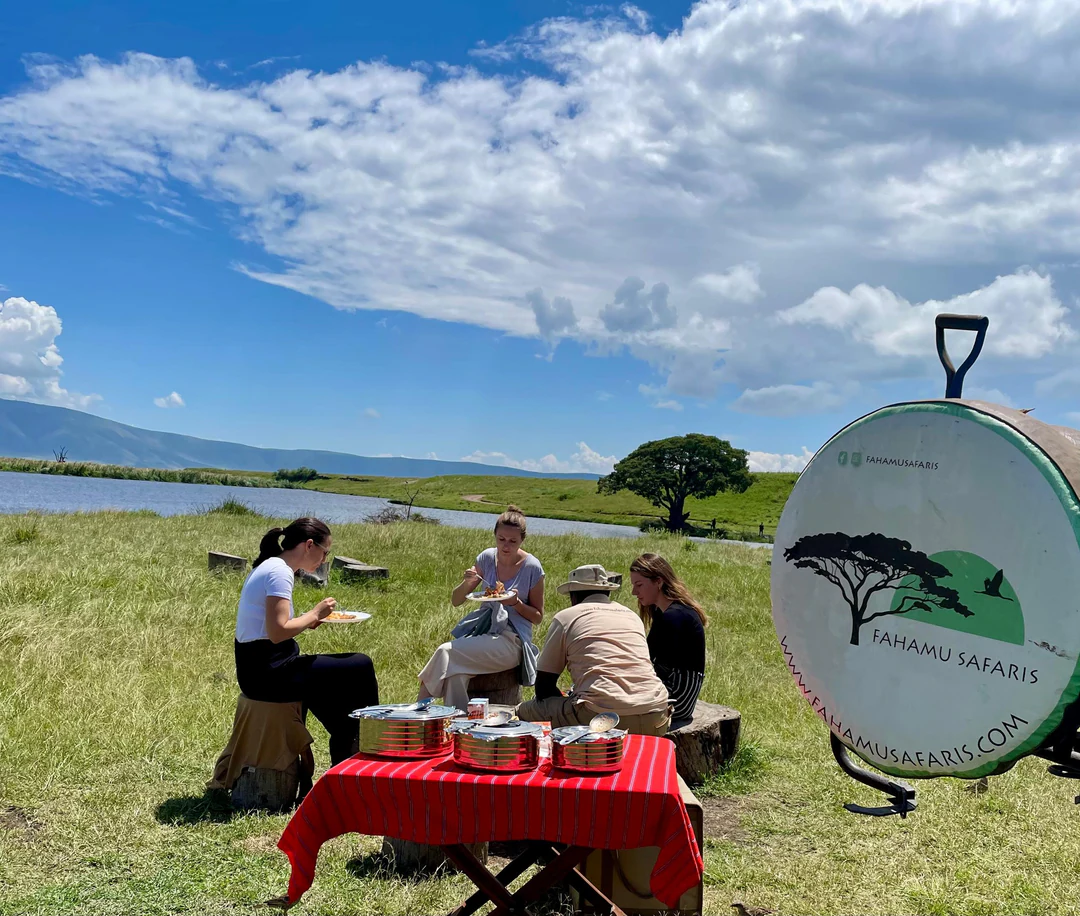
Most days start before sunrise with coffee, tea, and a few biscuits delivered to your tent, just enough to get you moving before the animals do. Breakfast proper comes later: eggs cooked your way, sausages, toast, fresh fruit, and local touches like chapati and millet porridge. One of the best safari traditions is the bush breakfast, where your crew sets a table out in the open and you eat with a view of the plains instead of four walls.
Lunch depends on your itinerary. On a moving day, you'll usually get a packed lunch box with sandwiches, grilled chicken, boiled eggs, and fruit, eaten at a picnic spot. On a slower day, lunch might be a hot, freshly cooked meal back at your lodge. Dinner is where kitchens show off a bit, with soup, a main course of fish, pasta, or meat, and dessert, often finished with a Tanzanian Kilimanjaro or Serengeti beer.
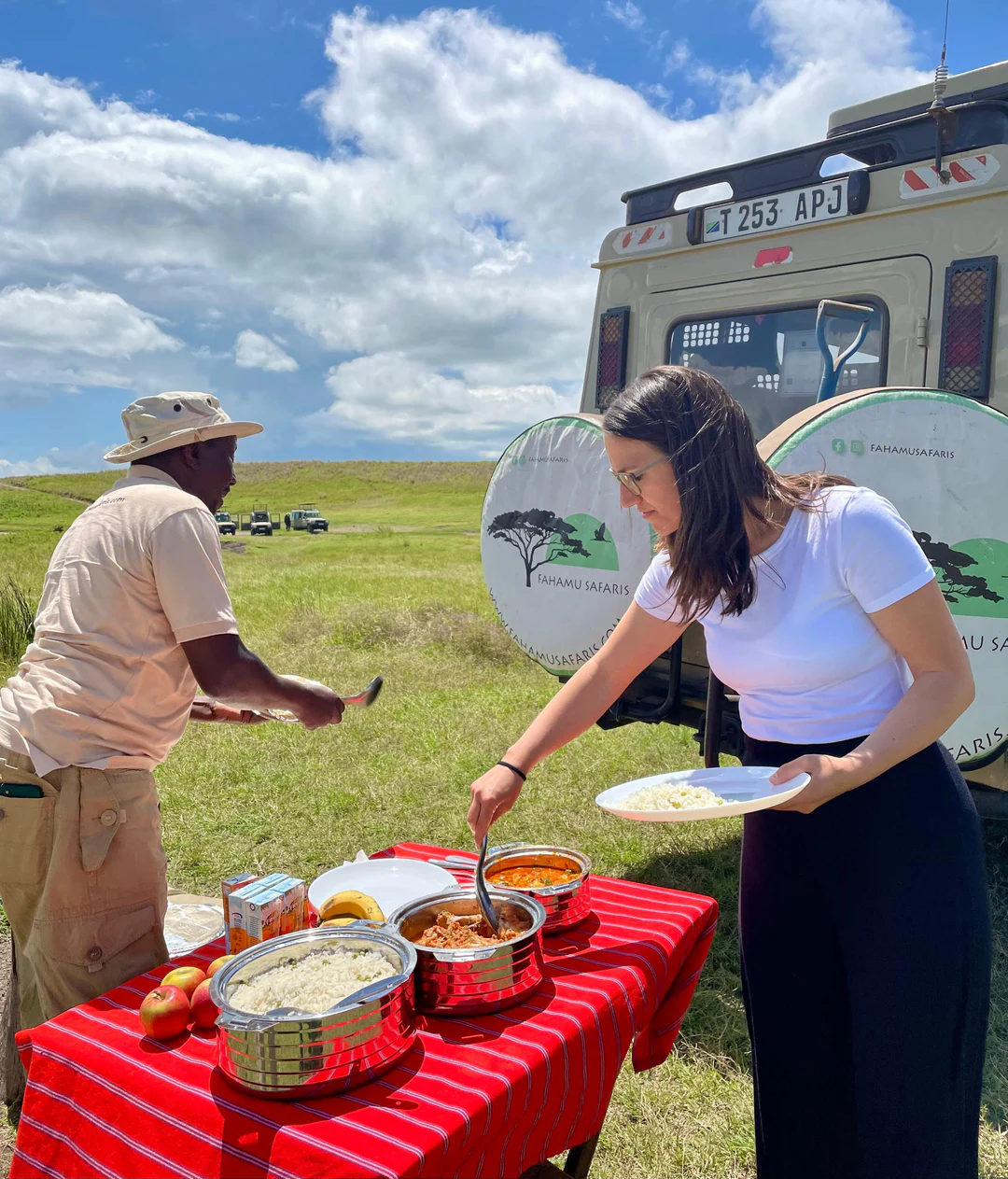
Luxury lodges run full kitchens with refrigeration and more variety. Mobile tented camps cook everything from scratch with what they can carry, and the results are usually just as good. We cover this in more detail on our full safari food guide, and you can see how meals fit into a full itinerary when you browse our Tanzania safari tours.
Swahili Cuisine: The Flavors Behind Every Tanzanian Meal
Tanzanian food didn't develop in isolation. Centuries of trade along the Indian Ocean coast brought Arab, Indian, and Persian cooking into contact with local African ingredients. The result is Swahili cuisine, a mix that still defines what you'll eat today. A few dishes show up again and again. Ugali is a thick, mild maize porridge served as the base for almost any stew or meat dish. Pilau is fragrant spiced rice, usually cooked with meat and vegetables, and it has roots in Indian cooking that arrived generations ago. Nyama choma, grilled meat, is close to a national dish. You'll find it at roadside grills as often as at your lodge. A few more regulars are worth trying. Chapati is a soft flatbread with an Indian cousin, mishkaki is marinated meat on skewers over charcoal, and chipsi mayai is fried potato chips folded into an omelette. Staples like maize, millet, rice, and beans pair with fresh spinach, tomatoes, and onions in almost every home-style dish. Coconut milk and warming spices like ginger, garlic, and chili do the heavy lifting on flavor. You don't need to seek this food out. Your guides and lodge staff will introduce you to it naturally over the course of your trip.